

Purity and pollution: Why should Roma be part of the Communities Discriminated on Work and Descent?
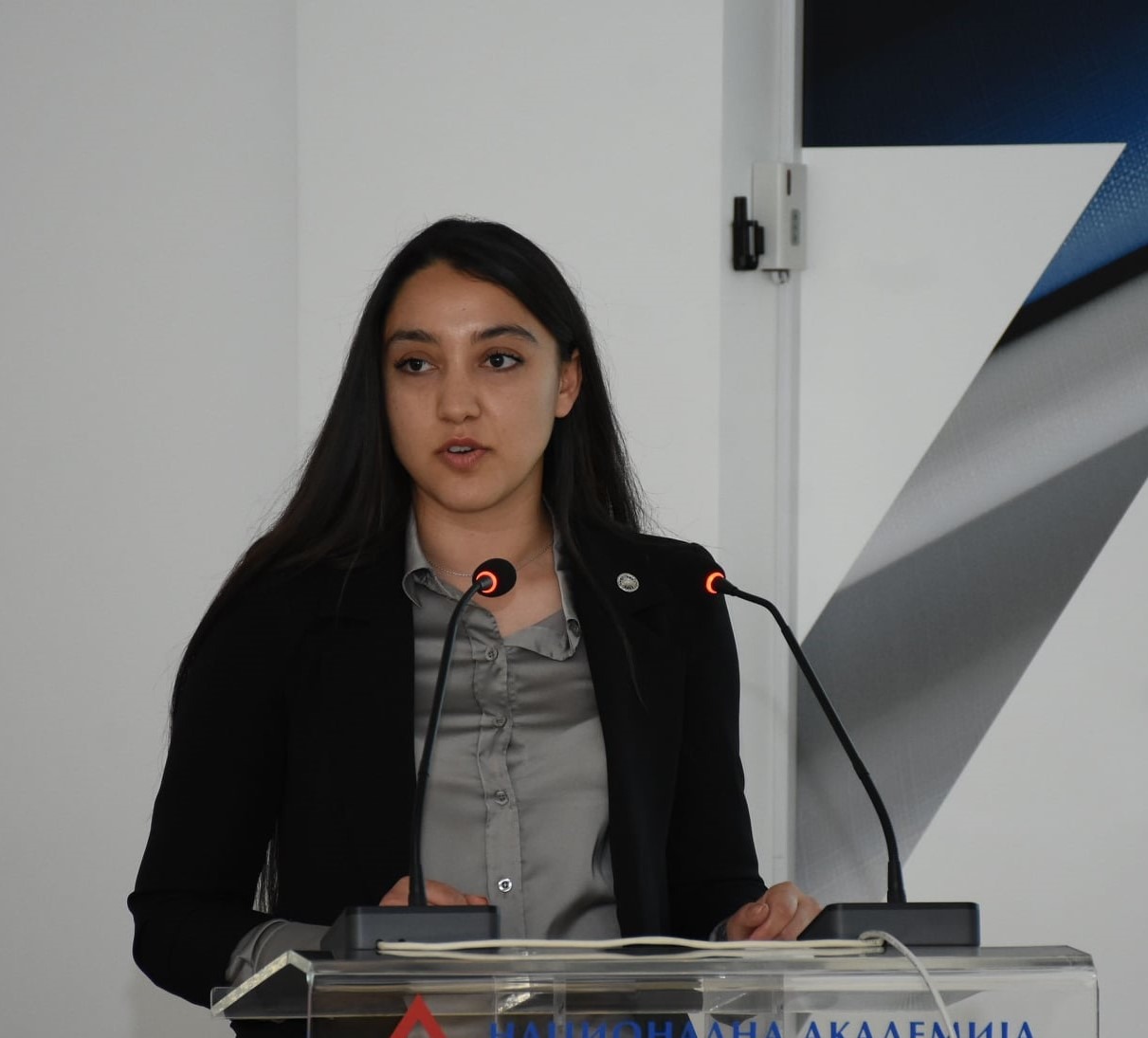
By Milena Reljic, Roma Rights Expert
Anthropologist Mary Douglas argued in Purity and Danger (1966) that ideas of pollution are not simply about hygiene. They are ways societies create social boundaries.
Purity represents order, belonging, morality and social acceptance, while pollution represents disorder, threat, exclusion and something considered “out of place.”
This framework is relevant to the Roma experience because certain forms of work historically associated with Roma, particularly work involving waste, animals, leather, metal, or other activities considered undesirable, could become socially stigmatized, and that stigma could extend from the occupation to the people performing it. In this way, occupational stigma contributed to the construction of Roma as socially inferior or “out of place,” reinforcing their exclusion from other forms of work and social participation.
Discrimination against Roma has never been based solely on ethnicity. Throughout European history, Roma have also been assigned a distinct social position associated with particular forms of labour considered undesirable, impure, or socially inferior.
Historically, many Roma communities were confined to specific occupations, including metalworking, horse trading, basket weaving, entertainment, music, leatherwork, fortune telling, waste disposal, seasonal labour, and other forms of informal or marginalized work. These occupations were frequently tolerated only because they fulfilled functions that the majority population was unwilling to perform while simultaneously reinforcing stereotypes that Roma belonged to a lower social class.
The discrimination did not arise because Roma performed these occupations. Rather, Roma were expected to perform them because they were Roma, the untouchables of Europe. Birth into the community predetermined both social expectations and opportunities, creating a cycle in which occupational identity became inherited alongside social stigma.
Education is one of the clearest places where inherited social disadvantage is reproduced. Roma children may experience segregated schools, segregated classes, lower expectations, discriminatory assessment or disproportionate placement in special education. These practices can limit educational attainment and, consequently, future employment opportunities. In this way, education can reproduce the social position associated with descent rather than providing a pathway out of it.
The Romanian experience illustrates this relationship particularly clearly. For five centuries, Roma were held in hereditary slavery, during which labour was not freely chosen but imposed according to inherited status. Enslaved Roma were bought, sold, inherited, and assigned specific forms of labour for the benefit of landowners, monasteries, and the State. Although slavery was abolished in 1856, its social and economic consequences continue to influence patterns of exclusion today. The abolition of slavery ended the legal system of forced labour, but it did not immediately erase the social hierarchy created by it. The association of Roma with servile and low status labour continued, contributing to stereotypes about the types of work considered appropriate for Roma.
How birth determines social status
Imagine there is a village with two groups of people.
One group is called the White Hats.
The other group is called the Black Hats.
Now imagine that, thousand year ago, everyone decided:
If you are born with a Black Hat, you can only do dirty jobs, like cleaning garbage or carrying heavy things. You cannot become a teacher, a doctor, or the mayor.”
The children of the Black Hats never got to choose. When a Black Hat child grew up, people would say:
“Your parents cleaned the streets, so you will clean the streets too.” Now imagine something changes…
Many years later, the law says:
“Everyone can choose any job!”
But people still think:
“Oh… you're a Black Hat. We don't want to hire you.”
So even though the law changed, the ideas in people's heads didn't. The Black Hat child studies hard, goes to university, becomes an engineer, but when employers see their name or their skin colour, they say:
“No thanks.”
So the person ends up with a low paid job anyway.
This is what CDWD means.
Being Roma did not just mean belonging to a different ethnic group. It also meant that society expected you to do certain kinds of work and prevented you from doing others. Those expectations were inherited from birth and continue to influence employment today.
That is why Roma fit within the Communities Discriminated Based on Work and Descent (CDWD) framework. It is not because all Roma have hereditary occupations today, but because birth into the Roma community has historically shaped, and in many places still shapes, how society treats Roma in relation to work and social status.
For Roma, discrimination can follow an intergenerational cycle: birth can shape social status, social status can influence expectations about the work a person should perform, and discrimination can limit access to better opportunities. This can lead to poverty and exclusion, which in turn create the same barriers for the next generation.
For many Roma communities, this cycle has persisted across generations. That intergenerational link between birth, occupational stigma, and continuing exclusion is what connects the Roma experience to the CDWD framework.
This historical relationship between descent and occupation continues to shape the present. Although many traditional occupations have disappeared due to industrialization and economic transformation, the stigma attached to them has not. In this sense, occupational discrimination has evolved rather than disappeared. Instead of hereditary occupations being legally imposed, inherited stereotypes continue to influence labour market outcomes. Roma often remain excluded from skilled professions, public administration, and positions of authority while being disproportionately represented in precarious employment. Their labour market position reflects the persistence of inherited social stigma rather than individual merit.
Discrimination against Roma is not merely the result of individual prejudice. Across Europe, it has been reproduced across generations through systems that assign inferior social status at birth and perpetuate exclusion regardless of an individual's education, occupation, or socioeconomic mobility.
The persistence of anti-Roma discrimination reflects many of the defining features identified within the CDWD framework, including inherited stigma, structural exclusion, segregation, and barriers to equal participation.
Roma share many characteristics associated with CDWD, including inherited social disadvantage, occupational stereotyping, segregation, limited housing and employment opportunities, and intergenerational poverty.
Occupational discrimination continues today through recruitment discrimination, precarious and low-paid work, unemployment, and stereotypes about Roma abilities.
Segregation reproduces inequality, including segregated settlements, poor housing conditions, school segregation, unequal healthcare, and exclusion from services.
History continues to shape present inequalities, including slavery in the Romanian principalities, forced assimilation, forced sterilization, the Roma Holocaust, and other forms of systemic exclusion.
Discrimination is intersectional, with Roma women, children, persons with disabilities,
LGBTQI+ Roma, and those living in poverty often facing multiple forms of exclusion.
Why Recognition Matters
Recognizing Roma within the CDWD framework does not suggest that all Roma communities have experienced identical historical trajectories.
Recognizing Roma communities within the CDWD framework would:
1. Acknowledge inherited forms of exclusion that extend beyond conventional understandings of racial discrimination.
2. Strengthen implementation of CERD General Recommendations.
3. Facilitate comparative learning between Roma communities and other communities discriminated against based on work and descent worldwide.
4. Strengthen advocacy by providing a stronger international human-rights framework to challenge structural discrimination.
5. Increase State accountability for discrimination based on work, descent, occupation and inherited status.
6. Support stronger measures against segregation in education, housing, employment and public services.
7. Improve access to remedies for Roma experiencing structural and occupational discrimination.
8. Strengthen Roma participation in designing and monitoring policies that affect their communities.
9. Make invisible forms of discrimination more visible within international human-rights
mechanisms.
The recognition of Roma within the framework of Communities Discriminated Based on Work and Descent acknowledges that anti-Roma discrimination is multidimensional and often combines racial, ethnic, descent-based, occupational, and structural forms of exclusion.
Descent alone explains who is discriminated against. Work explains how that discrimination has historically been maintained and continues to operate.
Today traditional occupations may have disappeared, but the prejudice remains.