

“Hear Us Now: Harnessing Science for Decent Work and Economic Inclusion of CDWD Youth”
Youth at the Forefront: Leveraging Science and Social Inclusion for Sustainable Development” SIDE EVENTS AT THE 2025 ECOSOC YOUTH FORUM Background: Communities Discriminated on Work and Descent (CDWD) face systemic exclusion, economic marginalization, and barriers to decent work (SDG 8). Science, technology, and innovation have the potential to break these cycles of discrimination by creating...

HEAR US NOW: Advancing Inclusion and Justice: Empowering Communities Discriminated on Work and Descent (CDWD) and other marginalised communities, Including Non-Binary Individuals, in SDG 16 and SDG 17
Online: ZoomHEAR US NOW: Advancing Inclusion and Justice: Empowering Communities Discriminated on Work and Descent (CDWD) and other marginalised communities, Including Non-Binary Individuals, in SDG 16 and SDG 17 Youth at the Forefront: Leveraging Science and Social Inclusion for Sustainable Development SIDE EVENTS AT THE 2025 ECOSOC YOUTH FORUM 1. Background Communities Discriminated on Work and...
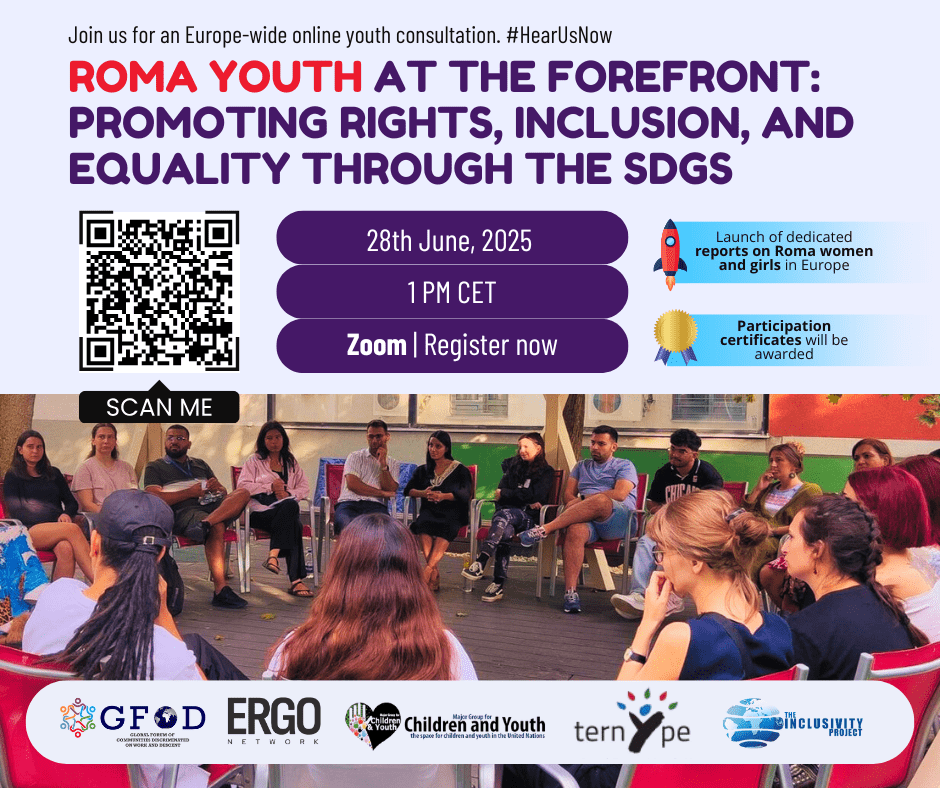
Roma Youth at the Forefront: Promoting Rights, Inclusion, and Equality through the SDGs
Online: ZoomJoin us for a Europe-wide virtual event on Roma youth and Sustainable Development Goals! Roma Youth at the Forefront: Promoting Rights, Inclusion, and Equality through the SDGs Co-organized by: GFoD, ERGO Network, ternYpe, and UNMGCY Date: 28 June Time: 13:00 CET/16:30 IST/11:00 GMT Virtual Event – Register here: https://theinclusivityproject-org.zoom.us/meeting/register/wo9dXKvkQEmX0bxPyLw25g Across Europe and beyond, Roma youth are...
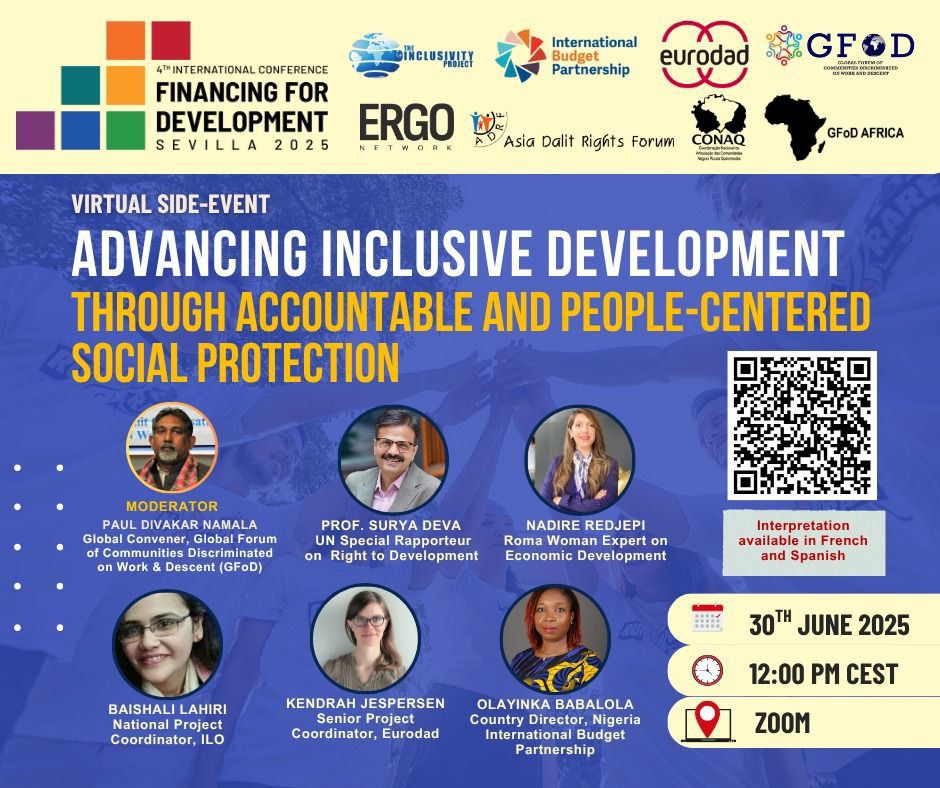
Fourth Financing for Development Conference – Seville Virtual Event: Advancing Inclusive Development Through Accountable and People-Centered Social Protection
Governments and international partners must prioritize social protection systems that are inclusive, accountable, and rooted in human rights. This panel explores how participatory frameworks, budget justice, and community-led action can help dismantle systemic discrimination—including discrimination based on work and descent (DWD)—and achieve equitable development. 🤝 Co-organized by: The Inclusivity Project (TIP), International Budget Partnership, Eurodad,...
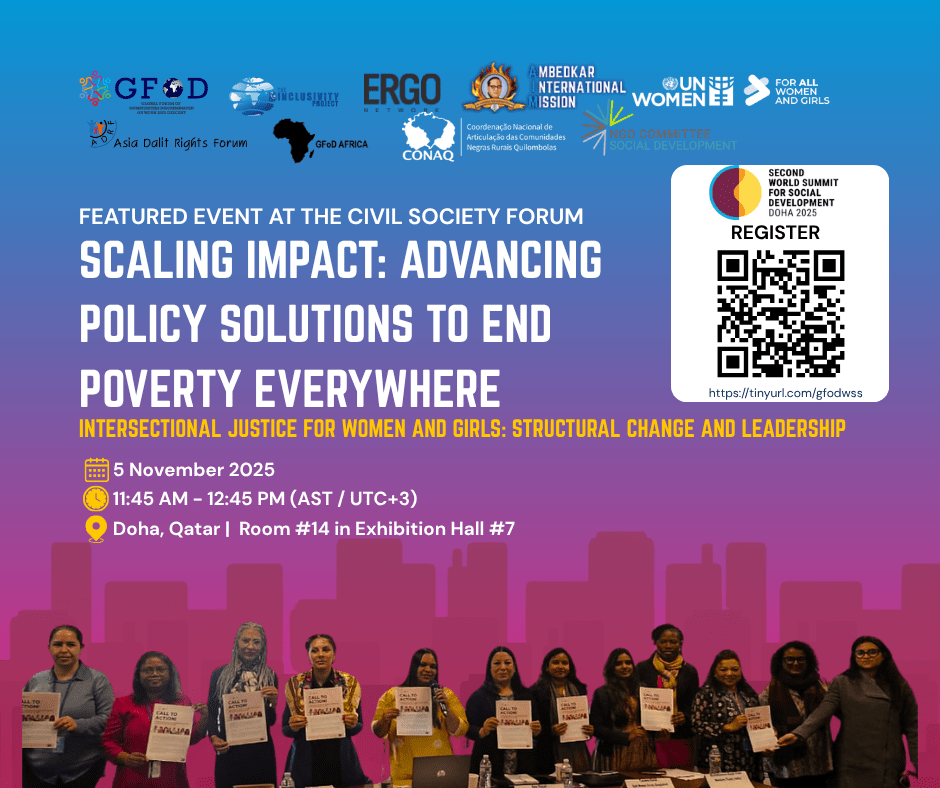
Featured Event at the Civil Society Forum – World Summit for Social Development
Room #14, Exhibition Hall #7 Doha, QatarIntersectional Justice for Women and Girls: Structural Change and Leadership 📍 Doha, Qatar – 5 November 2025, 11:45 AM–12:45 PM(AST / UTC+3) Register here The Inclusivity Project (TIP), in partnership with the Global Forum of Communities Discriminated on Work and Descent (GFoD), UN Women, ERGO Network, and other global partners, invites you to a powerful...
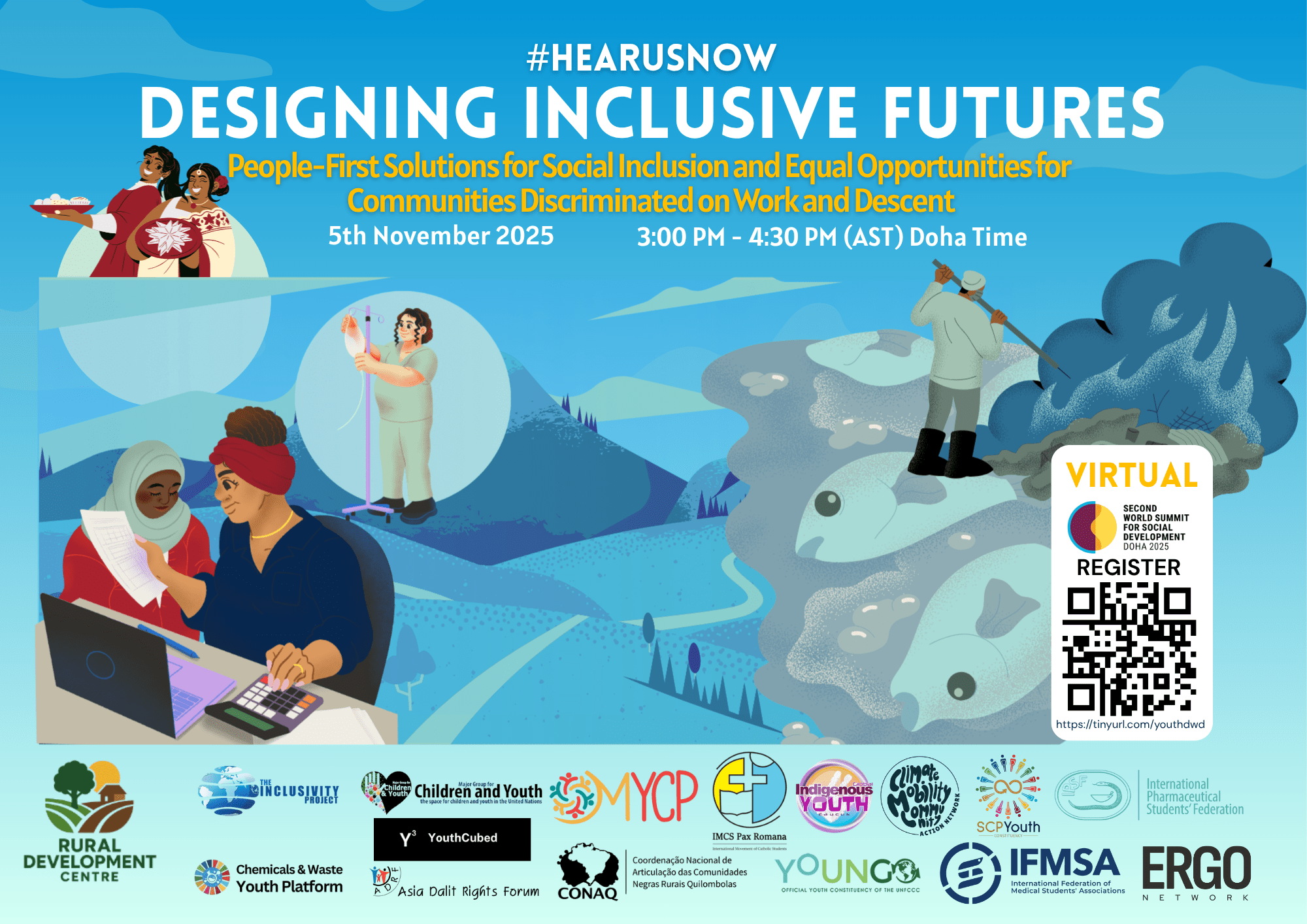
Designing Inclusive Futures: People-First Solutions for Social Inclusion and Equal Opportunities for Communities Discriminated on Work and Descent
Online: Zoom#HEARUSNOW Background:As the WSSD-2 convenes, this Solutions Session will spotlight community-led and multi-stakeholder initiatives addressing those most affected by social crises. Youth groups, stakeholders, IGOs, and Member States will present case studies/solutions focused on the contexts of Communities Discriminated on Work and Descent (CDWD) with intersections to Indigenous Peoples, and Migrants/Refugees under the theme of...
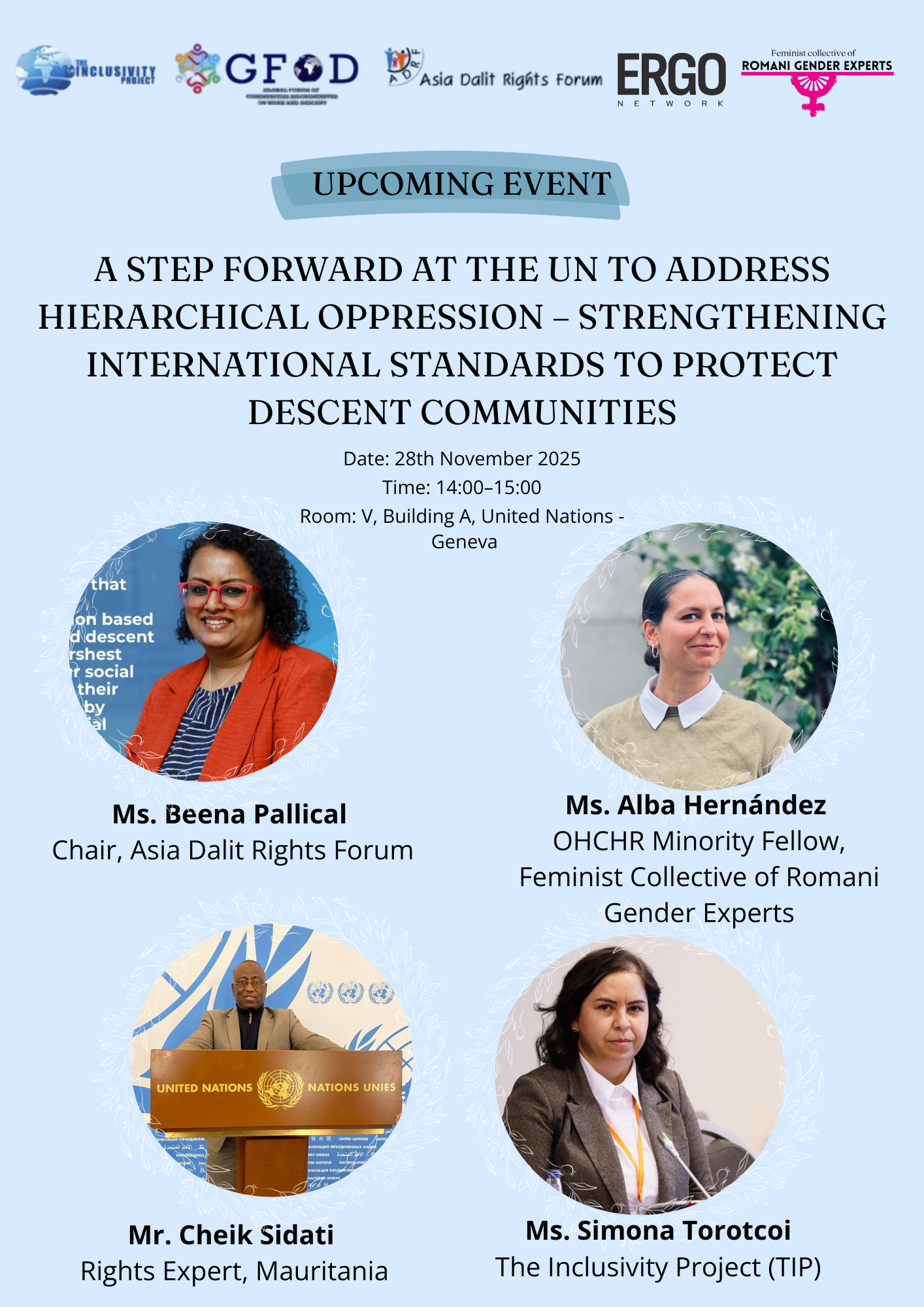
A Step Forward at the UN to Address Hierarchical Oppression – Strengthening International Standards to Protect Descent Communities
Discrimination based on Work and Descent (DWD) affects over 270 million people globally, often manifesting as social exclusion based on inherited status, practices of untouchability, and notions of "purity and pollution". When groups face extreme forms of discrimination in accessing employment, education, healthcare, and housing, their capacity to contribute to national development is severely curtailed....
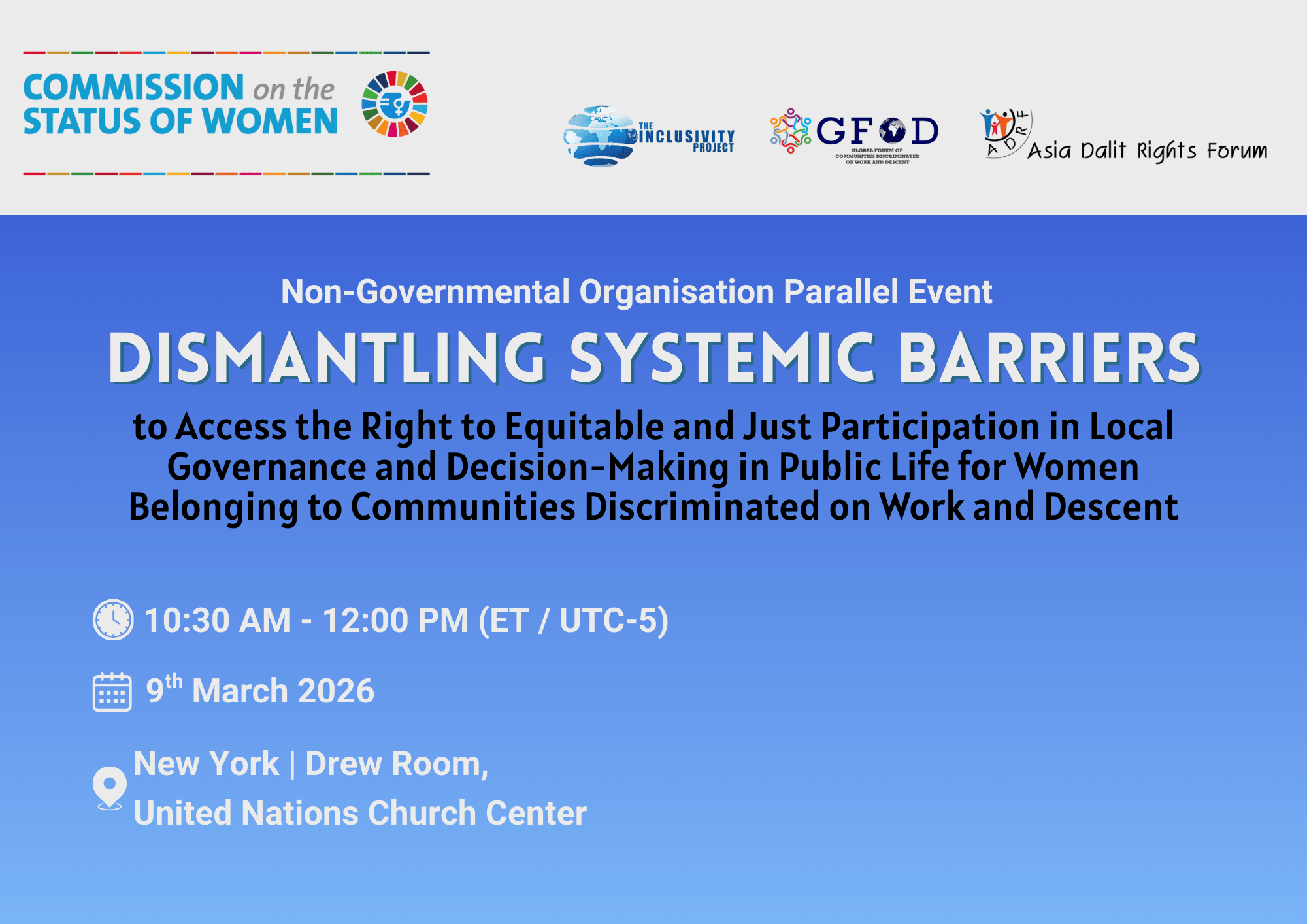
Dismantling Systemic Barriers to Equitable Participation in Local Governance and Public Life
Church Center for the United Nations (Drew Room)The Asia Dalit Rights Forum, in collaboration with the The Inclusivity Project, Feminist Dalit Organisation (FEDO Nepal), and Dalit Women Forum/Nagorik Uddyog, will host an in-person parallel event during CSW70. This event addresses the systemic barriers that prevent Dalit, Roma, Quilombola, and Palenque women — particularly those from communities discriminated on work and descent (CDWD)...
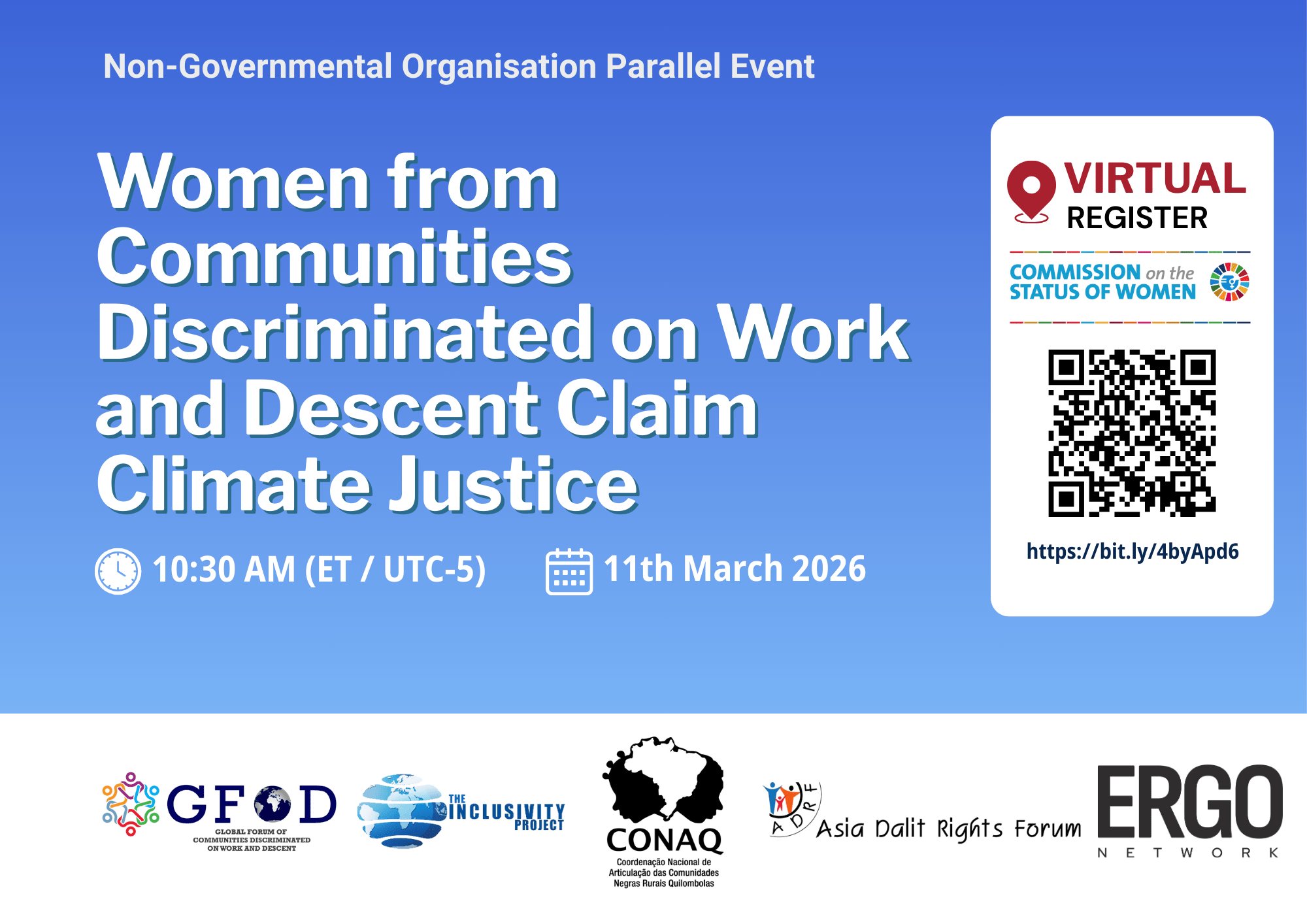
Women from Communities Discriminated on Work and Descent Claim Climate Justice
Climate change disproportionately impacts women from Communities Discriminated on Work and Descent, compounding entrenched structural inequalities. Caste- and descent-based discrimination, landlessness, inherited livelihood insecurity, and poverty intensify their exposure to climate shocks. The consequences include loss of livelihoods, displacement, increased unpaid care responsibilities, heightened risks of gender-based violence, and exclusion from relief, recovery, and climate...
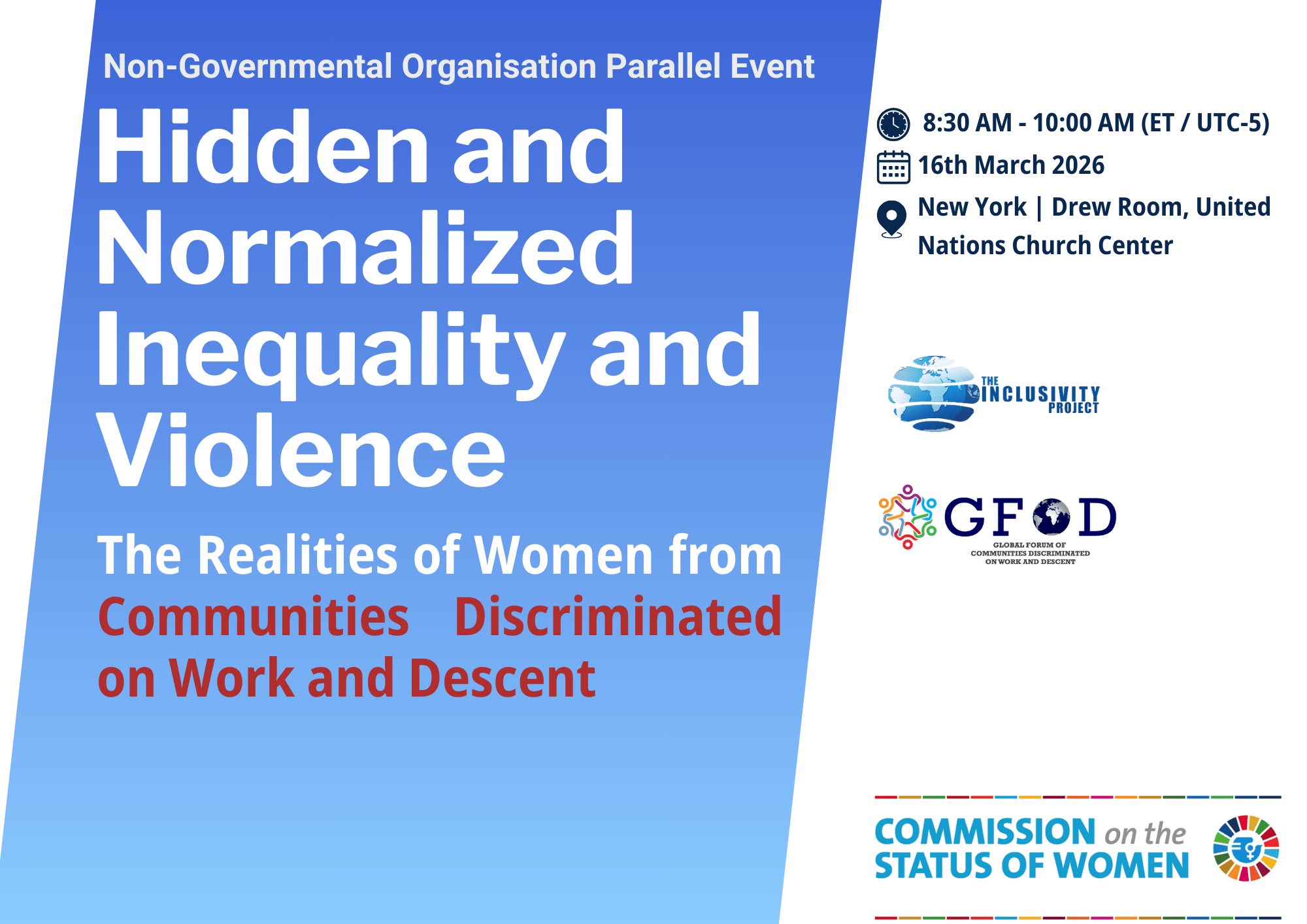
Hidden and Normalized Inequality and Violence: The Realities of Women from Communities Discriminated on Work and Descent
Drew Room, UN Church CenterAcross the world, women from communities discriminated on work and descent (CDWD)—including Dalit, Quilombola, Haratine, and Roma women—continue to face extreme, multidimensional, and often invisible forms of gender-based violence. Despite decades of international commitments, the violence they face remains under-reported, under-researched, and absent from global policy dialogues. The new UN Women Policy Paper on Women...
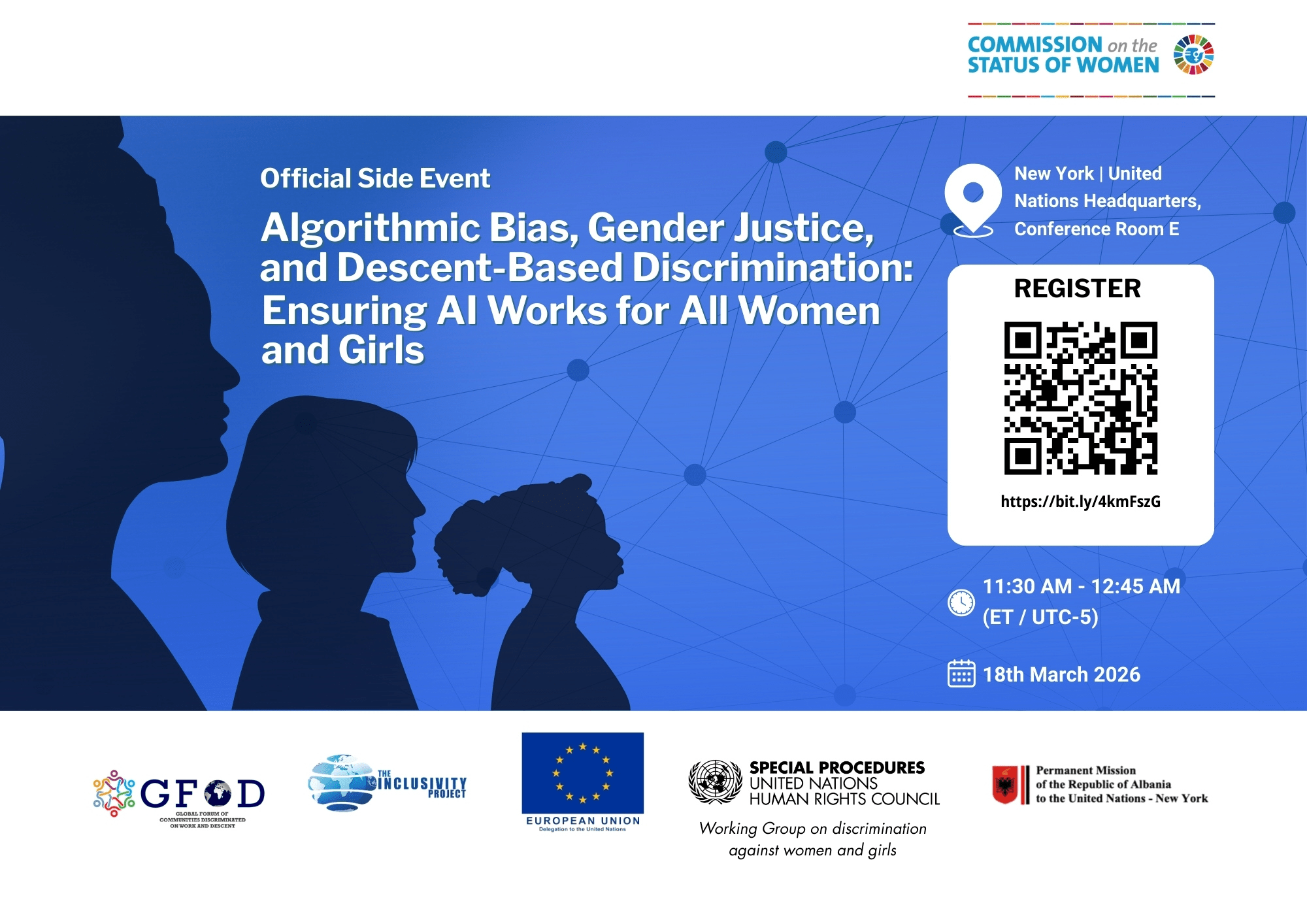
Algorithmic Bias, Gender Justice, and Descent-Based Discrimination: Ensuring AI Works for All Women and Girls
Conference Room E, UN Headquarters New York, United StatesGender discrimination remains deeply rooted in many societies and is often experienced through intersectional forms of inequality shaped by factors such as descent, race, ethnicity, socio-economic status, and digital access. As artificial intelligence becomes increasingly embedded across sectors, these intersecting inequalities risk being replicated and amplified through algorithmic systems. Tools like risk prediction algorithms, forecasting-based...
Beyond Informality: Addressing Roma Settlements in Europe—Challenges, Solutions, and the Way Forward
Online: ZoomAcross Europe, many Roma communities live in informal housing or settlements that lack security of tenure, access to basic services, or legal recognition. These living conditions often reflect systemic exclusion, discrimination, and policy gaps. Informal settlements expose Roma families to health hazards, forced evictions, and obstacles to education and employment. Roma communities, as groups facing discrimination...