
Where Do Roma Women’s Rights Stand Within the Global Agenda for Gender Equality Advocacy?
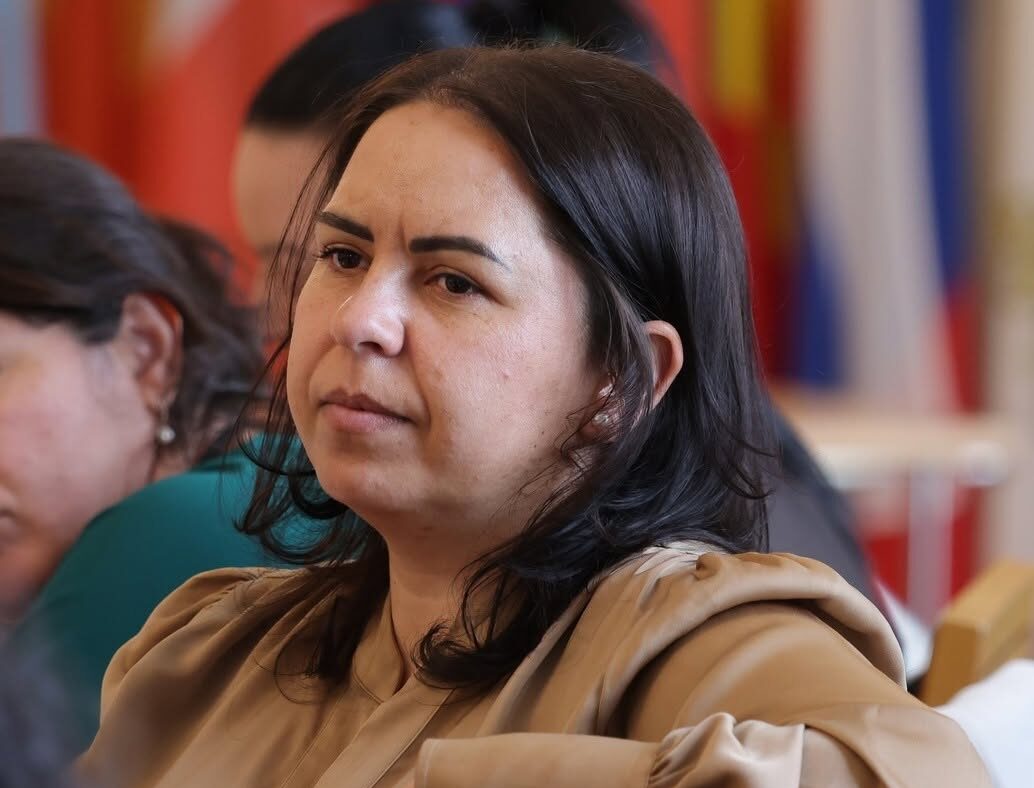
Speech by Simona Torotcoi at Consultative Advocacy Workshop for Roma and Sinti Women (2 June) and the launching event of ODIHR Handbook on Advocating for Roma and Sinti Women's Rights (3 June) that took place in Warsaw, Poland.
Photo by OSCE/Piotr Dziubak
Status
According to the OHCHR Universal Human Rights Index there are about 500 recommendations concerning Roma women issued by 24 different international mechanisms from 2006 to 2026 (half of them CEDAW related). This shows that the international human rights system has repeatedly documented the discrimination, exclusion, and violence affecting Roma women, and that these concerns are recognized across treaty bodies, Special Rapporteurs, Working Groups, and the Universal Periodic Review. While this demonstrates that the international human rights system recognizes the challenges faced by Roma women, it is actually a relatively modest number when spread across twenty years—amounting to roughly 25 recommendations per year across the entire UN human rights system. As Roma civil society organizations and stakeholders, we need to engage more strategically and systematically with treaty bodies, Special Procedures, the Universal Periodic Review, and other mechanisms to ensure that Roma women's experiences are documented, reflected in recommendations, and translated into stronger international accountability and national-level action.
But this recognition also exposes a troubling gap. The problem is not that Roma women are invisible in the human rights system; it is that this recognition has not been converted into influence, resources, or representation. We do not know whether Roma women shaped those recommendations, whether states implemented them, whether they affected funding priorities, or whether they opened doors to decision-making spaces.
This matters even more when we compare Roma women with other global constituencies. Indigenous women, women of African descent, women with disabilities, and rural women are supported by more visible institutional structures: dedicated UN forums, recurring thematic attention, permanent mechanisms, and stronger global networks. Roma women have recommendations, but they do not have an equivalent political infrastructure.
The UN system has identified the violations, but that recognition has still not produced comparable political attention, institutional support, funding, or meaningful participation for Roma women in global gender equality processes.
Our advocacy
At the Homepage – Global Forum of Communities Discriminated on Work and Descent – GFoD, we have joined forces with other women's groups facing similar forms of discrimination, and under the work and descent framework we are pushing the gender equality agenda forward together, because alone we would not get very far — especially when funding is limited, when access to information is uneven, and when navigating complex international systems requires time, expertise, and institutional support.
We are building alliances with Dalit women, Quilambola women, Burakumin and women of African descent, and others who face layered discrimination. These partnerships matter because they show that our struggles are connected, and that our responses must be connected too.
This is particularly important in global processes such as the Commission on the Status of Women. The CSW is the main intergovernmental body dedicated to gender equality and women's rights, and its agreed conclusions help define global priorities. Roma women have increasingly been present in CSW spaces, but presence is not the same as influence. To date, only one Roma representative has participated as part of a state delegation at the Commission on the Status of Women, through the delegation of Germany, and only two Roma women have had the opportunity to speak during official CSW sessions. While these are important milestones, they also highlight how far we still are from achieving meaningful representation and influence within global gender equality governance. At the Commission on the Status of Women, Roma women have increasingly organized, participated, and built alliances. Roma women are still rarely included in negotiated outcome documents, and our repeated calls for specific language are often not taken up by member states. Roma women remain largely absent from official delegations and decision-making roles.
Yet despite this solidarity, we continue to encounter resistance from institutions and Member States. Requests for meetings often go unanswered, invitations to participate or co-organize events are ignored, and even basic efforts to secure references to Roma women in negotiated outcome documents can become a political battle. More troubling still, many government representatives continue to show a lack of understanding of the realities facing Roma communities today.
The same pattern appears in the Beijing Platform for Action and its reviews. Beijing remains the central global blueprint for women's rights, and national reviews shape international debates on progress. Yet many national reports celebrate achievements on gender equality while failing to adequately reflect the realities of Roma women, even though Roma women continue to experience some of the most serious exclusion in Europe. Many reviews speak of progress, but too often they do so without naming Roma women at all. Roma and Sinti women are rarely visible within national reviews of the Beijing Platform for Action. Their specific experiences often disappear within broader categories such as “ethnic minorities” or “vulnerable groups.” As a result, policies frequently fail to address the structural racism and antigypsyism that shape their lives.
We see similar gaps in the work of UN Women and other relevant agencies. As the UN's leading agency on gender equality, UN Women plays a major role in shaping policy frameworks and supporting initiatives. There have been important moments of collaboration with Roma women's organizations, and intersectionality is increasingly recognized. But Roma women are still not consistently mainstreamed across UN Women programming at the global level. UN Women and the Global Forum have published last year a policy paper – was written by a Roma woman, which made it especially important in ensuring that Roma women's perspectives were reflected authentically and with lived experience at the center -bringing a Roma women's perspective into a broader framework of gender equality and intersectional discrimination. This collaboration was important because it helped ensure that the realities of Roma women were reflected in a UN policy process, while also strengthening shared advocacy across women's groups facing similar structural barriers.
CEDAW remains one of the strongest legal tools we have. The Committee has repeatedly addressed segregation in education, reproductive rights, violence against Roma women, access to healthcare, and political participation. At the Global Forum, we support our partners to use this mechanism to submit inputs, shadow reports – But many of these recommendations return in cycle after cycle because implementation remains weak. That is why our engagement with CEDAW is so important, including our contribution of comments to the Committee's draft general recommendation on gender stereotypes, where we brought in the Roma women's perspective through the work and descent lens.
The same challenge appears in the Sustainable Development Goals. SDG 5 is a global commitment to gender equality, but progress cannot be measured honestly when Roma women remain statistically invisible. A promise to leave no one behind is difficult to assess when the data does not show who is being left behind. Too many Voluntary National Reviews speak about equality without disaggregated evidence on Roma women. We support Roma women NGOs to contribute to these processes.
Developments
One particularly promising development we are working on is the upcoming Guidance Note being developed by the UN Working Group on discrimination against women and girls.
This initiative has the potential to strengthen the international understanding of intersectional discrimination and provide practical guidance to states, UN agencies, and human rights mechanisms on addressing discrimination experienced by women and girls affected by work and descent based discrimination.
The Guidance Note can contribute to making visible the ways in which gender discrimination intersects with antigypsyism and descent-based exclusion. It can also encourage states to collect disaggregated data, consult affected communities, and develop targeted policies that respond to the lived realities of Roma and Sinti women and girls.
Recommendations
I believe there are several channels within the international human rights system that are important for advancing Roma women's rights at the global level.
Roma civil society can use key UN channels more strategically: CEDAW, the Universal Periodic Review, UN Special Procedures, the Commission on the Status of Women, and the Sustainable Development Goals. These spaces can be used to submit evidence, push for stronger language on antigypsyism and intersectional discrimination, and hold states accountable for implementation.
Member States have a decisive role in making these channels meaningful. They negotiate the language that appears in outcome documents, accept or reject recommendations, and determine whether international commitments are translated into national action.
In CEDAW and the Universal Periodic Review, states can directly address the situation of Roma women by accepting recommendations on segregation, violence, reproductive rights, education, housing, employment, and political participation, and then reporting on concrete follow-up.
In the Commission on the Status of Women, they can ensure Roma women are present in national delegations, support our participation in side events and negotiations, and help secure language that reflects our realities rather than leaving us invisible in the final text.
In the SDG process, they can require disaggregated data, include Roma women in national consultations and voluntary reviews, and show how they are advancing the commitment to leave no one behind in practice, not only in rhetoric. In all of these spaces, Member States can choose either to keep Roma women at the margins or to open the door to real partnership, listening, and accountability.
We therefore call on Member States to recognize the specific challenges faced by Roma women and to ensure that these are reflected in the global gender equality agenda. Roma women must be included in consultations, delegations, and decision-making spaces, and states should be open to working with us directly.