
CSW71 Asia-Pacific Youth & Adolescent Regional Consultation
Written by Pooja Kumari, Sangita Dutraj and Kamna Singh (GFoD Rights Experts 2026)
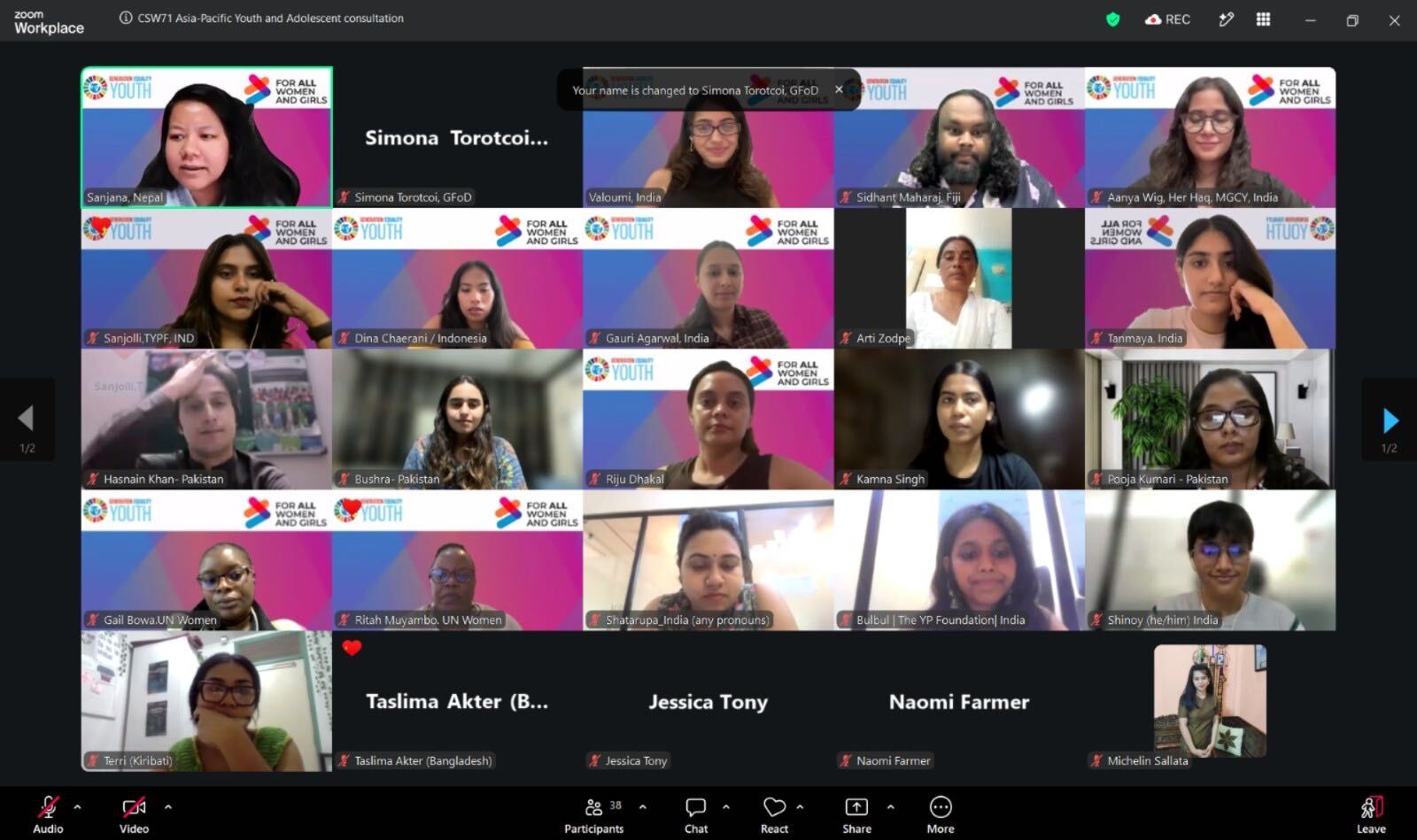
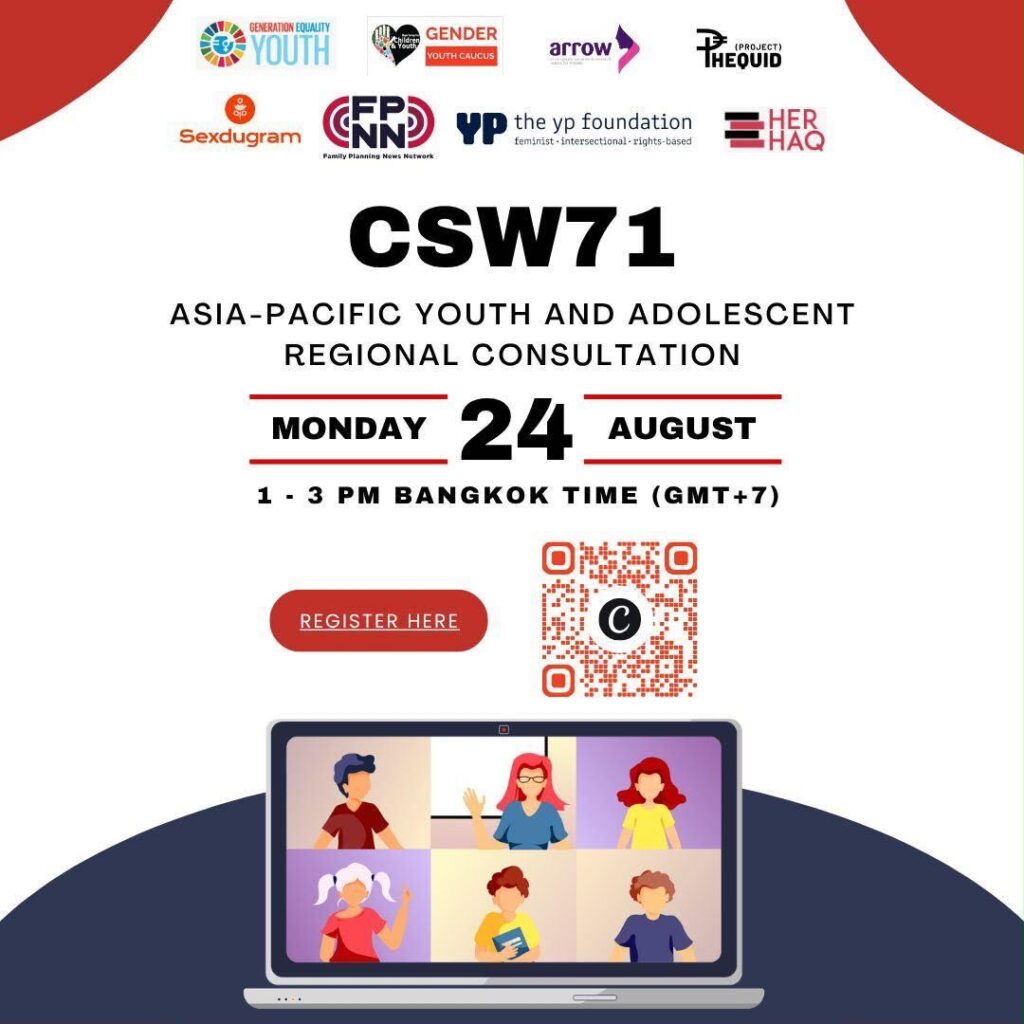
On 24 August 2026, we, three Rights Experts Pooja Kumari (Pakistan), Sangita Dutraj (Nepal), and Kamna Singh (India) participated in the CSW71 Asia-Pacific Youth & Adolescent Regional Consultation, where young people from across the Asia-Pacific came together to share their perspectives and priorities ahead of the 71st session of the United Nations Commission on the Status of Women.
We participated as Rights Experts on Dalit communities from India, Pakistan and Nepal, representing the Global Forum of Communities Discriminated on Work and Descent, bringing Dalit women's perspectives from South Asia while connecting them to the broader experiences of other Communities Discriminated on Work and Descent across the globe.
Collectively, we emphasised a bottom-up approach to conversations on Dalit communities in South Asia. While we often speak about the inclusion of women and girls in policy and decision-making, we asked what conditions make that participation possible in the first place. We also emphasised the need to look at Dalit women beyond the lens of vulnerability and recognise them in their completeness, agency and capacity for leadership.
For young Dalit girls, exclusion begins much earlier. Thinking about young girls from Dalit communities means thinking about access to clean water and sanitation, dignity in schools, safe spaces for learning, and safety from physical and sexual violence. It also means recognising vulnerability to sexual violence and the ways caste relations can shape both violence and access to justice, including the fear of not being believed or protected when survivors speak. It means paying attention to mental well-being and to the ways schooling systems can reproduce social hierarchies rather than enabling healthy self-formation and self-worth.
We also emphasised the importance of making space for Dalit histories and lived experiences. Young Dalit girls should not have to leave their histories and identities outside the classroom to participate in education or society.
This perspective builds on the work already undertaken by the Global Forum of Communities Discriminated on Work and Descent and UN Women. In 2025, they worked together on Women Belonging to Communities Discriminated on Work and Descent: Advancing Intersectional Rights and Justice, a policy paper that brings attention to the experiences and rights of women from these communities. The paper calls for meaningful participation of affected women in the planning, implementation, and evaluation of policies, as well as community-led transformation and leadership.
This also raises a larger question for the development agenda beyond 2030: how do we move from speaking about marginalized young women to creating the conditions in which they can develop agency, leadership and the power to speak for themselves?
This requires leadership from communities, talking with communities rather than speaking for them, and more equitable sharing of platforms, resources, knowledge and opportunities. It also requires making Dalit and other Communities Discriminated on Work and Descent women visible within global gender-policy processes.
Conclusion
We called for meaningful inclusion, equal opportunities, protection from discrimination and violence, access to justice and social protection, and greater participation in decision-making.
Gender equality means ensuring that those facing the greatest barriers are heard, recognised and empowered to shape their own futures.