
Water Justice for All: GFoD Calls for an End to Work and Descent Based Exclusion at the 2026 UN Water Conference
Communities discriminated on work and descent call for recognition, dignity, meaningful participation and equitable access to water, sanitation and climate resilience.
The Global Forum of Communities Discriminated on Work and Descent (GFoD) has released six policy briefs and a focus on women, water and dignity for the 2026 UN Water Conference. The package urges governments to address work- and descent-based discrimination as a barrier to universal water, sanitation and hygiene. Dalits, Roma, Quilombola, Haratine, Osu and other affected communities face exclusion shaped by caste, descent, inherited status and occupation. These factors influence access to water and sanitation, hazardous work, public investment and water-related decision-making.
More than 330 million people experience work- and descent-based discrimination. Universal water access requires addressing the systems that exclude them, not only expanding infrastructure.
The advocacy package links the UN Water Conference priorities with affected communities' experiences, calling for water justice, human rights, decent work, climate resilience and meaningful participation.
Six thematic briefs and a focus on women, water and dignity
The briefs identify barriers and recommend action to ensure Member States address the needs of communities discriminated on work and descent.
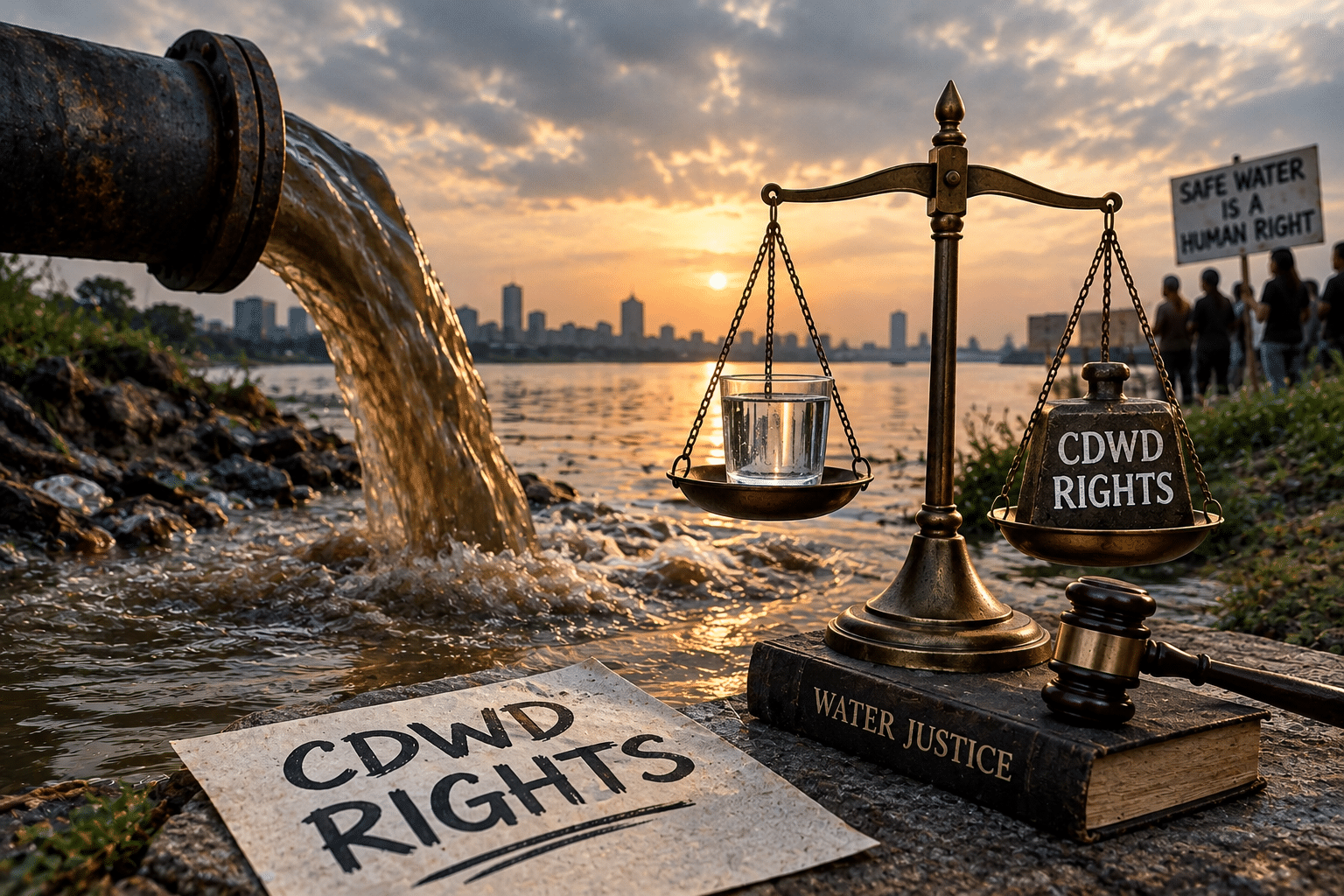
To access the Policy brief, click here.
Water for People: Ending Exclusion, Segregation and Stigma in Access to Drinking Water, Sanitation and Hygiene
CDWD communities face water and sanitation exclusion linked to segregation, caste restrictions, unequal municipal services and insecure land rights across regions.
The issue is not only infrastructure, but whether communities can use services safely and with dignity.
The brief calls on Member States and relevant stakeholders to:
* Prioritize excluded settlements in WASH planning and investment.
* Ensure safe, accessible and stigma-free water and sanitation.
* Collect disaggregated data on CDWD inequalities.
* Include community representatives in planning and decisions.
* Address women's and girls' safety, care and menstrual hygiene needs.
Water for Prosperity: Dignity, Decent Work and Ending Hazardous Sanitation Work
Many CDWD community members remain concentrated in hazardous, stigmatized and poorly paid sanitation work due to inherited status and occupational exclusion.
Manual sewer, septic-tank and drain cleaning, often without protective equipment, reflects discrimination and restricts access to safer work. Such hazardous work persists despite legal bans.
GFoD calls for recognizing sanitation workers' rights and ending discrimination that confines them to dangerous work.
The brief calls for:
* Eliminate hazardous sanitation work through safe technology and enforcement.
* Provide fair wages, protective equipment, health insurance and social protection.
* Create pathways to safe, dignified employment.
* Include sanitation workers in WASH planning and decisions.
* Address women workers' risks, including violence and exploitation.
Water for Planet: Climate and Environmental Risks for Marginalized and Segregated Settlements
CDWD communities often live in underserved, insecure or hazardous settlements, including areas near dumps, open sewers, polluted water and flood risks.
Discriminatory land access and unequal investment worsen exposure to climate hazards, threatening water, sanitation and housing.
GFoD calls for climate-resilient water planning that addresses how caste, descent and inherited status shape vulnerability.
The brief recommends:
* Map vulnerable CDWD settlements in climate-risk assessments.
* Prioritize resilient WASH infrastructure in excluded communities.
* Include CDWD representatives in climate and water planning.
* Address climate risks faced by women and girls.
* Strengthen land and housing rights.
Water for Cooperation: Participation of CDWD Communities in Water Governance
CDWD communities are often excluded from water user committees, basin mechanisms, municipal planning and transboundary cooperation. This limits their influence over water allocation, services and infrastructure, while local knowledge is overlooked.
GFoD calls for CDWD communities to be recognized as rights-holders, knowledge-holders and decision-makers.
The brief recommends:
* Ensure CDWD representation in water and municipal bodies.
* Include communities in WASH design, monitoring and accountability.
* Recognize community evidence in water governance.
* Enable CDWD participation in regional and transboundary cooperation.
* Support women's and young people's leadership.
Water in Multilateral Processes: Integrating CDWD into Global Water Governance and SDG 6 Monitoring
CDWD communities remain largely invisible in datasets, while national averages can hide unequal access to water and sanitation. Community evidence and participatory research reveal discrimination missed by conventional monitoring and help assess progress on SDG 6.
GFoD calls for visible CDWD data and participation in global water governance.
The brief calls for:
* Include CDWD-sensitive indicators in SDG 6 reporting.
* Disaggregate WASH data by caste, descent, occupation and location.
* Recognize community evidence and participatory research.
* Consult CDWD communities in the UN Special Envoy for Water's processes.
* Ensure CDWD representation in multilateral water discussions.
Investments for Water: Equitable Financing for Historically Excluded Communities
CDWD communities may be overlooked in water investments due to segregation, insecure land, missing data, limited participation and discriminatory services. Even major infrastructure investments can leave excluded settlements underserved. Without tracking funding and inclusion, investment may reinforce inequality.
GFoD calls for financing that identifies excluded communities, directs resources to their needs and measures service improvements.
The brief recommends:
* Map excluded settlements for investment planning.
* Track whether finance reaches CDWD communities.
* Apply inclusion criteria to government and donor funding.
* Support community monitoring of investments and services.
* Prioritize climate-vulnerable CDWD settlements.
Women, water and dignity: Addressing intersecting gender and descent-based discrimination
Gender and descent discrimination intersect to affect women's and girls' access to water, sanitation, livelihoods, services and decision-making. Women and girls often carry water-related household burdens and face safety risks. Women sanitation workers face exploitation, while climate insecurity deepens inequality.
A 2024 FRA survey published in 2025 found 17% of Roma and Travellers in 13 surveyed countries lacked indoor tap water, compared with 2% of the general population. In North Macedonia, the figures were 14% and 2%.
Brazil's 2022 Census found piped water in 66.7% of households in officially delimited Quilombola territories, compared with 95.14% nationally; 18.21% of residents had no piped water.
These gaps affect women's time, safety, health and opportunities. The brief also notes water-collection harassment of Dalit women and vulnerabilities among women from other descent-discriminated communities.
GFoD urges states to address gender and descent together, improve disaggregated data, protect women sanitation workers and ensure CDWD women and girls participate in water, climate and investment decisions.
A collective call for water justice
Across the six policy briefs and the dedicated gender focus, GFoD advances a common message: universal access to water and sanitation cannot be achieved without addressing discrimination based on work and descent.
The advocacy package calls on Member States and relevant stakeholders to:
1. Recognize discrimination based on work and descent as a structural barrier to water and sanitation.
2. End hazardous sanitation work and ensure dignity, safety and decent work for sanitation workers.
3. Ensure climate-resilient water planning and adaptation investment reach historically excluded settlements.
4. Include CDWD communities as rights-holders and decision-makers in water governance from the outset.
5. Strengthen disaggregated data and community-generated evidence in WASH monitoring and SDG 6 reporting.
6. Direct and track water investments equitably so that historically excluded communities benefit from public and development financing.
7. Address intersecting gender and descent-based discrimination, ensuring that CDWD women and girls have safe access to water and sanitation and participate in governance, climate planning and investment.
The 2026 UN Water Conference provides an important opportunity to bring these concerns into global water policy discussions and national commitments. GFoD urges Member States to make the experiences and demands of communities discriminated on work and descent visible in their statements, policies, investment decisions and implementation plans.
Water justice begins by recognizing the communities left behind—and ensuring they have the power, resources and recognition needed to shape the decisions that affect their lives.
Read the full GFoD advocacy package: Water Justice for All — Advocacy Policy Briefs for the 2026 UN Water Conference.
Prepared by The Inclusivity Project and the Global Forum of Communities Discriminated on Work and Descent (GFoD).